The condition of a Second-hand ball mill directly determines its service life, operational stability, and grinding efficiency, which is the core and key link of the entire selection process. Many buyers are eager to save costs and ignore the detailed inspection of equipment condition, only to find that the equipment frequently breaks down after purchase, resulting in production delays, increased maintenance costs, and even direct economic losses. To avoid such risks, it is necessary to conduct a comprehensive, detailed, and professional inspection of the Second-hand ball mill from multiple aspects before making a purchase decision, ensuring that every core component is in good condition.
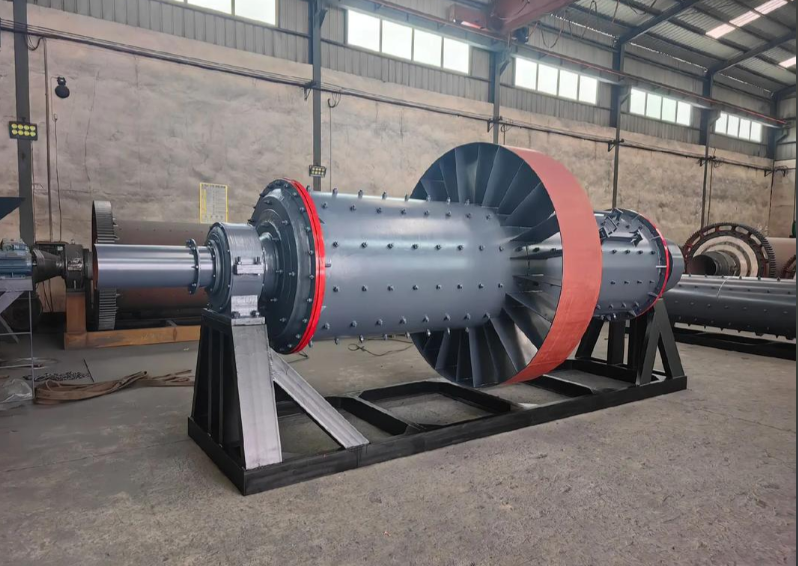
First, focus on inspecting the cylinder, which is the core component of the ball mill and bears the main grinding pressure. Observe carefully whether there are cracks, deformations, or serious wear on the cylinder surface; for minor wear, you can judge the degree by visual inspection and hand touch, while for suspected cracks or hidden damages, it is best to conduct professional flaw detection to avoid missing potential risks. The cylinder’s thickness and wear degree directly affect the grinding effect and equipment safety; if the cylinder is severely worn, it may lead to material leakage, reduced grinding efficiency, or even cylinder rupture in severe cases. Second, thoroughly inspect the transmission system, which includes gears, bearings, couplings, and motors. Check if the gears have excessive wear, uneven meshing, or tooth surface damage; if the bearings have overheating traces, abnormal noise, or loose clearance; if the couplings are concentric, the bolts are tight, and there is no excessive vibration during operation. The transmission system is the power transmission core of the ball mill; any fault in this part will directly lead to the equipment being unable to operate normally. Third, check the lubrication system in detail. Ensure that the lubricating oil circuit is unobstructed, there is no oil leakage at the joints, and the oil quality is normal (no turbidity, sediment, or peculiar smell). The lubrication system is like the "blood" of the ball mill; insufficient lubrication or poor oil quality will lead to rapid wear of components such as gears and bearings, significantly shortening the equipment’s service life. In addition, it is also necessary to check the feeding and discharging systems, including the feeding hopper, discharging port, and grid plate, to ensure that there is no blockage, deformation, or serious wear. Only by ensuring that all core components are in good condition can you select a reliable Second-hand ball mill that can operate stably for a long time.



 English
 Chinese
 French
 German
 Russian
 Italy
Italy Spain
Spain Portugal
 Japanese
 Korean
 Arabic
 Traditional