Hot Keywords:Used Stone CrusherUsed Ball MillUsed Rotary KilnBall Mill
Second-Hand Lithium Carbonate Rotary Kiln: A Cost-Effective Production Choice for the Lithium Battery Industry
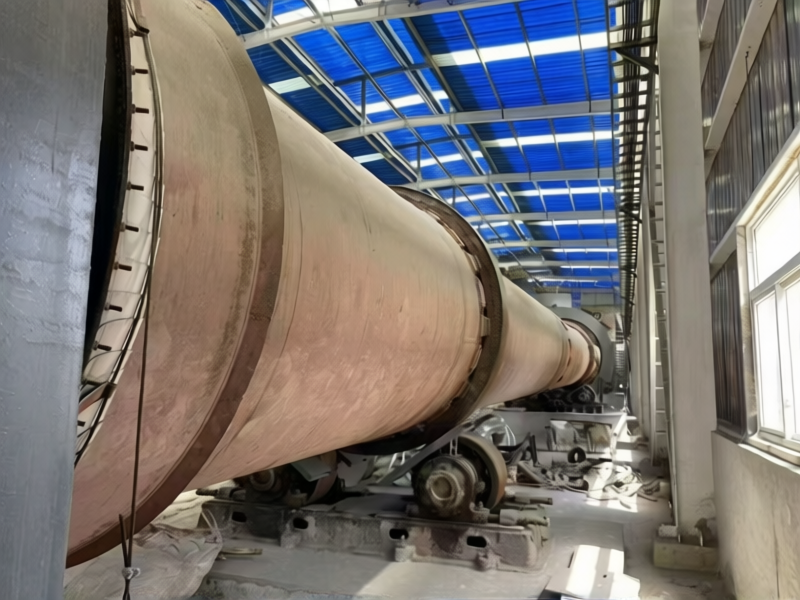
Against the backdrop of the rapid development of the new energy industry, demand for production and processing equipment for lithium carbonate, a core raw material for lithium batteries, continues to rise. As key equipment for lithium ore roasting and acidification treatment, the lithium carbonate rotary kiln is an indispensable piece of equipment in lithium carbonate production lines. Compared with the high procurement cost of brand-new equipment, second-hand lithium carbonate rotary kilns have become a popular choice for small and medium-sized lithium salt processing enterprises and production line expansion and renovation projects due to their cost-effectiveness, fast commissioning and controllable costs, playing an important supplementary role in the lithium battery industry chain.
Lithium carbonate rotary kilns are mainly used for high-temperature roasting and acid roasting of lithium ores such as spodumene and lepidolite, serving as core equipment for lithium ore crystal transformation and lithium ion extraction. In the production process, lithium ore raw materials are fed into the inclined rotating kiln body through a feeding system, where α-type crystal transforms into β-type at high temperatures. Lithium ions are then effectively separated via acid roasting, laying the foundation for subsequent leaching, purification, lithium precipitation and other processes, which directly affects the output and quality of lithium carbonate products. Most second-hand lithium carbonate rotary kilns come from production line upgrades and equipment replacements of large lithium battery enterprises. With complete main structures and stable performance of core components, they can fully meet normal production needs after professional inspection and renovation.
Core Advantages of Second-Hand Lithium Carbonate Rotary Kilns
1. Significantly Reduced Investment Costs
Brand-new lithium carbonate rotary kilns, especially large-sized, high-precision electrically heated models, involve extremely high costs for procurement, transportation and installation, placing heavy financial pressure on enterprises. After depreciation, second-hand equipment costs only 30% to 60% of new ones, greatly cutting early fixed asset investment. This allows enterprises to allocate more funds to raw material procurement, process optimization and market expansion, effectively easing cash flow pressure and improving project return on investment.
2. Shortened Commissioning Cycle
It often takes several months or longer for a new rotary kiln to go from customized production and transportation to installation and debugging, causing serious delays to project schedules. Second-hand lithium carbonate rotary kilns are available in sufficient stock. After overhaul, renovation and testing by professional manufacturers, they can be quickly transported to the site for installation and put into production in a short time. This helps enterprises seize market opportunities and achieve rapid capacity realization, especially suitable for emergency capacity expansion and short-term production projects.
3. Mature and Reliable Equipment Performance
High-quality second-hand lithium carbonate rotary kilns on the market are mostly industrial-grade equipment produced by regular manufacturers, verified by long-term operation. Their structure, working principle and applicable processes are highly mature. Unlike new equipment, they have no running-in period, featuring stronger operational stability and lower failure probability. With proper inspection and replacement of core components, they can achieve production efficiency and processing performance close to new equipment.
4. Strong Adaptability and Flexible Modification
Second-hand lithium carbonate rotary kilns can be customized and upgraded according to actual production needs. Whether adjusting kiln rotation speed and temperature control systems, or replacing heating elements and sealing devices, they can quickly adapt to production processes of different lithium ore raw materials and capacity scales. They are highly practical for lepidolite roasting, spodumene acidification, and small and medium-sized lithium carbonate production lines.
Key Points for Procurement, Inspection and Maintenance of Second-Hand Lithium Carbonate Rotary Kilns
The core of purchasing second-hand lithium carbonate rotary kilns is to control equipment quality and avoid defective units, with the following priorities:
First, verify basic equipment information. Understand the manufacturer, service life, past operating load and maintenance records. Prioritize equipment with short service life, proper maintenance and good brand reputation. Meanwhile, confirm that specifications, kiln dimensions, heating methods and temperature control ranges match your own production processes.
Second, inspect core components. Focus on whether the kiln shell is deformed, internal refractory materials are intact, driving system motors and reducers operate smoothly, heating elements (resistance wires, silicon carbide rods, etc.) are worn, sealing devices are tight, and temperature control systems are accurate. These components directly determine operational stability and require timely replacement or repair if severely worn.
Third, confirm equipment debugging and after-sales service. Choose professional second-hand equipment suppliers to ensure comprehensive overhaul, cleaning and testing. Complete after-sales support should be provided, including installation guidance, fault repair and parts supply, to avoid maintenance difficulties after purchase.
Fourth, carry out equipment modification and upgrading. Before operation, optimize dust removal and temperature control systems in line with environmental and production standards, improving environmental performance and production accuracy to meet current requirements for lithium carbonate production.
Application Prospects of Second-Hand Lithium Carbonate Rotary Kilns
With the sustainable development of the lithium battery industry, market demand for lithium carbonate remains high. The number of small and medium-sized lithium salt processors and waste lithium battery recycling enterprises is growing, boosting demand for cost-effective production equipment. Second-hand lithium carbonate rotary kilns perfectly meet the needs of such enterprises with low cost, fast commissioning and stable performance, supporting normal lithium carbonate production while effectively controlling costs and enhancing market competitiveness.
Meanwhile, under increasingly strict environmental policies, upgraded second-hand lithium carbonate rotary kilns equipped with high-efficiency dust removal and waste gas treatment units can realize clean production in compliance with industrial environmental standards, further expanding application scenarios. They are an ideal economical and practical choice for both new small and medium-sized lithium carbonate production lines and replacement of existing equipment.
In conclusion, second-hand lithium carbonate rotary kilns are by no means inferior equipment, but a rational and efficient option for the lithium battery industry. For enterprises entering the lithium carbonate processing sector, controlling project costs and achieving rapid capacity growth, selecting professionally inspected and reliable second-hand lithium carbonate rotary kilns reduces investment risks while seizing market opportunities, bringing both economic and production benefits. High-quality second-hand lithium carbonate rotary kilns will continue to create value in the future lithium battery industry chain, serving as a strong driver for industrial development.
Previous:Used Iron Ore Rotary Kilns
Xinmi Kaiyang Furnace Industry Co., Ltd
+86-13676907460
Follow Us
© 2026 Xinmi Kaiyang Furnace Industry Co., Ltd. Site Map


If you have any queries, get in touch today! Don't hesitate. We try to take the extra step for our customer satisfaction.
 English
 Chinese
 French
 German
 Russian
 Italy
Italy Spain
Spain Portugal
 Japanese
 Korean
 Arabic
 Traditional