Hot Keywords:Used Stone CrusherUsed Ball MillUsed Rotary KilnBall Mill
Used Rotary Kilns for Nickel-Iron Ore: A Cost-Effective Option for Nickel-Iron Smelting
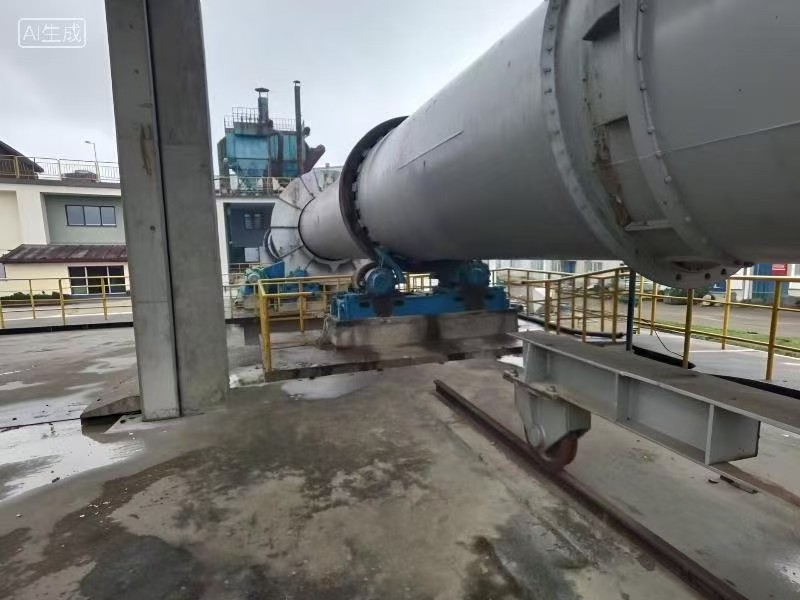
Used rotary kilns for nickel-iron ore are thermal equipment for nickel-iron smelting that have been dismantled, repaired, and refurbished and are now circulating again. They are mainly used for drying, roasting, and pre-reduction of laterite nickel ore and nickel-iron ore, making them a popular choice for small- to medium-sized nickel-iron production lines and technological upgrade projects to control costs.
I. Core Advantages (Why Choose Used?)
- Significantly Reduced Costs: Prices are only 30%–50% of new equipment, significantly reducing initial investment and shortening the payback period.
- Short Start-up Cycle: Abundant stock and quick retrofitting eliminate the lengthy design, manufacturing, and transportation cycles of new kilns, allowing for production in as little as 1–3 months.
- Mature and Reliable Technology: Circulating equipment is mostly manufactured by large companies and has undergone actual operating condition verification, ensuring mature technology, low failure rate, and compatibility with the RKEF process for nickel-iron ore.
- Flexible Production Line Adaptability: A full range of specifications (φ1.8×36m~φ4.8×72m, etc.) can be matched to meet the needs of 50–500t/d nickel-iron ore processing capacity.
II. Potential Risks (Essential for Purchase)
- Inconsistent Component Wear: The kiln body, tires, support rollers, and refractory lining experience natural wear; maintenance costs may be higher than for a new kiln.
- Operating Condition Adaptability Issues: Kilns originally used for cement and lime production may not meet the 900–1000℃ high-temperature reduction requirements of nickel-iron ore if improperly modified.
- Ownership and Source Risks: There may be ownership disputes, refurbishment of scrapped or refurbished kilns, and falsification of parameters; strict verification is required.
III. Core Acceptance Points for Purchase
1. Kiln Body - No obvious deformation, ellipticity, or cracks; localized corrosion depth < 10% of wall thickness.
- Welds pass non-destructive testing; straightness and roundness meet standards.
2. Tires and Support Rollers - Uniform surface wear, no cracks or peeling; contact area ≥70%.
- Mostly ZG35CrMo/42CrMo material, heat-treated.
3. Refractory Lining - High-alumina bricks/castables without large-area detachment; remaining thickness ≥40% of the original design.
- High-temperature sections (900–1000℃) require resistance to peeling and alkaline corrosion.
4. Transmission and Sealing - Gears mesh well, no broken teeth; motor and reducer operate stably without oil leakage.
- Kiln head and tail seals are intact (labyrinth/graphite/cylinder), preventing air and ash leakage.
5. History and Ownership - Prioritize equipment that has been idle for 3–5 years, well-maintained, and originally used in nickel ore/metallurgy.
- Verify factory certificates, ownership documents, and maintenance records.
IV. Key Points of Refurbishment and Upgrade
- Lining Reconstruction: Replace high-temperature sections with magnesia-alumina spinel bricks/high-alumina wear-resistant bricks to extend service life.
- Transmission Upgrade: Replace bearings and lubrication system; add frequency converter speed control to adapt to nickel-iron ore process speeds.
- Temperature Control Optimization: Add multi-point temperature measurement, pressure monitoring, and PLC/DCS automatic control to stabilize kiln temperature.
- Sealing Enhancement: Adopt a new composite seal to reduce heat loss and improve environmental compliance.
V. Applicable Scenarios
- Small and medium-sized nickel-iron ore production lines; pilot projects for startups.
- Existing production line expansion, backup, and emergency replacement.
- Comprehensive recycling projects for low-grade nickel-iron ore and tailings.
- Technical upgrade projects with limited budgets and a focus on rapid production.
VI. Summary
Used nickel-iron ore rotary kilns offer excellent cost-effectiveness and rapid production startup, but the key lies in rigorous selection, meticulous repair, and process adaptation. Choosing the right equipment and performing proper refurbishment can achieve production capacity and recovery rates close to those of a new kiln, significantly reducing the investment threshold.
Xinmi Kaiyang Furnace Industry Co., Ltd
+86-13676907460
Follow Us
© 2026 Xinmi Kaiyang Furnace Industry Co., Ltd. Site Map


If you have any queries, get in touch today! Don't hesitate. We try to take the extra step for our customer satisfaction.
 English
 Chinese
 French
 German
 Russian
 Italy
Italy Spain
Spain Portugal
 Japanese
 Korean
 Arabic
 Traditional