Technical parameters are the core indicators to measure the performance, production capacity, and applicability of a Second-hand ball mill. Many buyers only pay attention to the appearance and price of the equipment, ignoring the matching of technical parameters, which leads to the situation that the purchased Second-hand ball mill cannot meet the actual production needs after installation, such as insufficient output, unqualified product particle size, or excessive energy consumption. Therefore, before purchasing a Second-hand ball mill, it is necessary to carefully check and compare the technical parameters of the equipment, ensuring that all parameters match the production requirements.
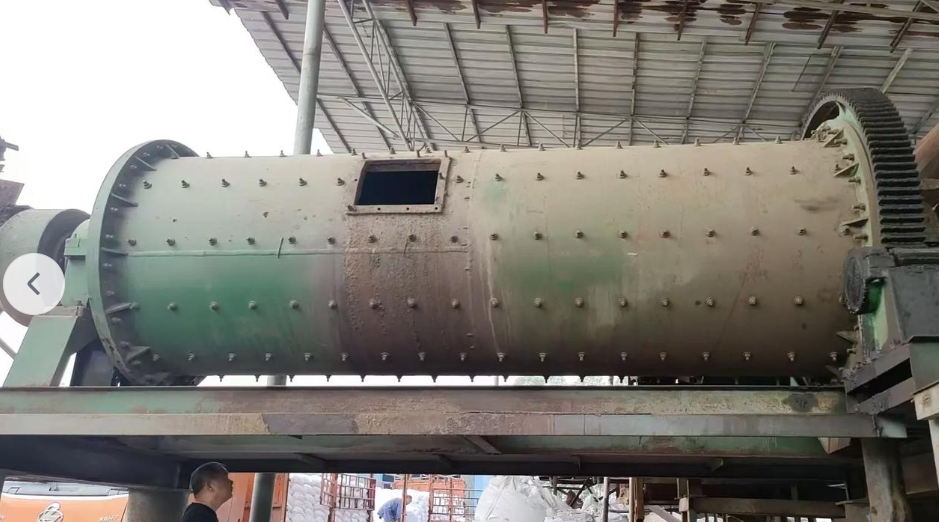
The core technical parameters of a Second-hand ball mill include cylinder size (diameter × length), rotating speed, motor power, processing capacity, product particle size, and grinding medium load. First, the cylinder size is a key factor affecting the grinding effect and production capacity. The diameter of the cylinder determines the impact force of the grinding medium (steel balls); a larger diameter means a higher falling height of the steel balls, stronger impact force, and better coarse grinding effect. The length of the cylinder affects the residence time of the material in the cylinder; a longer cylinder allows the material to be ground more fully, which is suitable for fine grinding. When selecting, it is necessary to determine the appropriate cylinder size according to the required grinding fineness and production capacity. Second, the rotating speed of the ball mill is generally 65% to 80% of the critical speed. The critical speed refers to the minimum rotating speed at which the grinding medium is thrown to the cylinder wall by centrifugal force and no longer falls. If the rotating speed is too high, the grinding medium will be in a centrifugal state, losing the grinding effect; if the rotating speed is too low, the impact force of the grinding medium is insufficient, reducing the grinding efficiency. Therefore, it is necessary to choose a Second-hand ball mill with a rotating speed that matches the material characteristics and grinding requirements. Third, the motor power determines the processing capacity and grinding capacity of the ball mill. The power needs to be matched with the hardness of the material, the cylinder size, and the required output; if the power is too small, it will lead to insufficient grinding force and low output; if the power is too large, it will cause unnecessary energy waste. Fourth, the processing capacity (output) of the Second-hand ball mill should meet the actual production needs of the enterprise; it is not advisable to choose a model with excessive output (resulting in energy waste) or insufficient output (affecting production progress). Finally, the product particle size should be consistent with the production requirements; if ultra-fine grinding is needed, a Second-hand ball mill with a grading system should be selected, which can adjust the particle size of the finished product flexibly. By carefully checking and matching these technical parameters, you can ensure that the purchased Second-hand ball mill can play its maximum role in the production line, improving production efficiency and reducing operation costs.




 English
 Chinese
 French
 German
 Russian
 Italy
Italy Spain
Spain Portugal
 Japanese
 Korean
 Arabic
 Traditional